

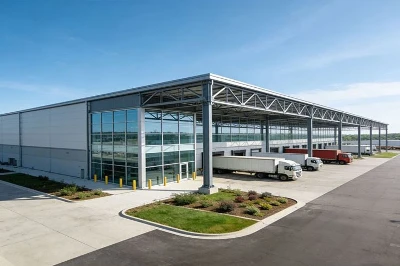


PEB vs. Conventional Steel: Why theTotal Cost of Ownershi Favors Pre-Engineered Systems in 2026
Jun 24, 2026
Leave a message
Looking Beyond the Per-Ton Price
A common mistake in steel sourcing is focusing only on the "Price per Ton." However, the smartest developers look at the Time to Market and Total Cost of Ownership (TCO). This is where Pre-Engineered Buildings (PEB) outperform conventional "stick-built" steel.
The PEB ROI Formula: 3 Ways You Save
1. Material Optimization (The Tapered Beam): Unlike uniform conventional beams, PEB uses tapered sections that put strength only where it's needed. This reduces total steel weight by 15-20% without sacrificing load capacity (Q355B).
2. Foundation Savings: Lighter steel frames mean lighter foundations. Our clients typically report a 10% reduction in concrete and rebar costs for the substructure.
3. Speed = Revenue: PEB is a 100% bolt-connection system. What takes 4 months with conventional steel takes 2.5 months with PEB. For a commercial warehouse, those extra 1.5 months of rent are pure profit.
10-Year TCO Comparison
| Metric | PEB (ZSL System) | Conventional Steel |
|---|---|---|
| Engineering Cost | Included | High (Third-party) |
| Erection Time | 8 Weeks | 14 Weeks |
| Site Welding | < 5% | > 40% |
| 10-Year Maintenance | Low (Factory finish) | Moderate |
| Overall ROI | High | Moderate |
Is Conventional Steel Ever Better?
Yes. For high-rise skyscrapers (30+ floors) or extremely complex architectural landmarks, conventional steel remains the standard. However, for 95% of industrial warehouses, workshops, and commercial halls, PEB is the superior financial decision.
ZSL's PEB Excellence
Our PEB systems are designed using advanced finite element analysis (FEA) to ensure every gram of steel is utilized. We provide the full package: Main frame, secondary purlins, cladding, and accessories-all engineered to fit perfectly on site.
💡 See how much you can save with a PEB design.
Send us your building dimensions for a "PEB vs. Conventional Cost Comparison".
Send Inquiry