

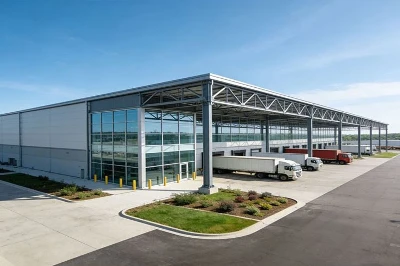


Steel-structured buildings and residences
Dec 05, 2025
Leave a message
Compared to other construction methods, steel structures offer advantages in terms of use, design, construction, and overall economics, including lower costs and the ability to be easily relocated.
Steel-framed houses can better meet the requirements for large, flexible interior spaces compared to traditional buildings. By reducing the cross-sectional area of columns and using lightweight wall panels, the usable area is increased, resulting in approximately 6% more effective usable space.
Excellent energy efficiency: The walls utilize lightweight, energy-efficient standardized C-shaped steel, square steel, and sandwich panels, providing good insulation and seismic resistance. Energy savings of 50% are achieved.
Using steel structures in residential buildings fully utilizes the ductility and strong plastic deformation capabilities of steel, resulting in excellent seismic and wind resistance, significantly improving the safety and reliability of the residence. Especially in the event of earthquakes or typhoons, steel structures can prevent catastrophic building collapse.
Lighter overall weight: Steel-framed residential systems are lighter, approximately half the weight of concrete structures, significantly reducing foundation costs.
Fast construction speed: The construction period is at least one-third shorter than traditional residential systems. A 1000 square meter building can be completed in just 20 days with five workers.
Good environmental performance: Steel-framed residential construction significantly reduces the use of sand, stone, and cement. The materials used are primarily green, 100% recyclable or biodegradable. When the building is demolished, most materials can be reused or biodegraded, generating minimal waste.
Flexibility and versatility: The large open-plan design allows for multiple interior space configurations, meeting diverse user needs.
Meets the requirements of housing industrialization and sustainable development. Steel structures are suitable for large-scale factory production, offering a high degree of industrialization. They integrate advanced finished products such as energy-saving, waterproof, and heat-insulating materials, windows, and doors, enabling integrated design, production, and construction, thus improving the level of the construction industry.
Compared to ordinary reinforced concrete structures, steel structures offer superior advantages such as homogeneity, high strength, fast construction speed, good seismic resistance, and high recyclability. Steel has much higher strength and elastic modulus than brick, stone, and concrete; therefore, under the same load conditions, steel components are lighter. From the perspective of failure modes, steel structures exhibit significant deformation before failure, making them ductile structures where potential dangers can be detected in advance, thus preventing catastrophic failure.
Steel structure factory buildings offer advantages such as lightweight construction, reduced foundation requirements, less material usage, lower cost, shorter construction time, large spans, safety and reliability, aesthetic appeal, and structural stability. Steel structure factory buildings are widely used in various construction sectors, including large-span industrial plants, warehouses, cold storage facilities, high-rise buildings, office buildings, multi-story parking garages, and residential buildings.
Send Inquiry