



Reinforcement Techniques For Steel Structures
Jan 04, 2026
Leave a message
Reinforcement Techniques
Steel structures can also be damaged, and we must identify and address problems promptly. The main factors causing damage to steel structures include:
(1) Insufficient structural bearing capacity due to load changes, exceeding service life, and changes in codes and regulations;
(2) Deformation, twisting, damage, and dents of components due to various accidents, resulting in weakened component cross-sections, warped members, and cracked connections;
(3) Deformation, cracking, and warping of components or connections caused by temperature differences;
(4) Corrosion caused by chemical substances and electrochemical corrosion leading to weakened cross-sections of steel structure components;
(5) Other factors including errors in design, manufacturing, and construction, as well as improper use and operation during the service life.
There are three main reinforcement techniques for steel structures:
(1) Cross-section strengthening method: Reinforcing with steel in local areas or along the entire length of the component, connecting them into a whole to share the load;
(2) Changing the structural analysis model: Adding additional supports, adjusting the load distribution, reducing the internal force level, and applying forced displacement to the supports of indeterminate structures to reduce stress peaks;
(3) Prestressed cable method: Using high-strength cables to reinforce weak points of the structure or improve the overall bearing capacity, stiffness, and stability of the structure.
Steel Structures
Refers to a structural form that can bear and transmit loads, formed by connecting steel plates and hot-rolled, cold-formed, or welded profiles through connecting elements. Steel structure systems have comprehensive advantages such as light weight, factory manufacturing, quick installation, short construction period, good seismic performance, quick return on investment, and less environmental pollution. Compared with reinforced concrete structures, they have unique advantages in terms of "high, large, and light" structures. Globally, especially in developed countries and regions, steel structures are reasonably and widely used in the field of construction engineering. The steel structure industry is usually divided into five major subcategories: light steel structures, high-rise steel structures, residential steel structures, spatial steel structures, and bridge steel structures.
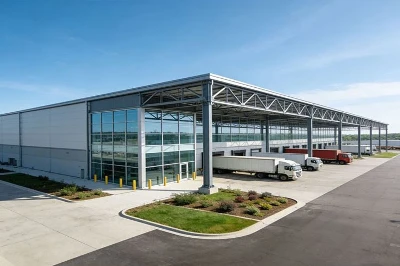
Steel structures are widely used in various engineering constructions, such as steel bridges, steel factory buildings, steel gates, various large pipelines and containers, high-rise buildings, and tower and rail structures.
Send Inquiry