

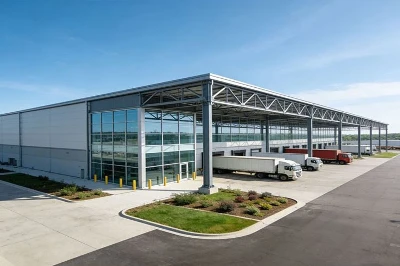


What Exactly Does Safety Inspection Of Steel Structure Factory Buildings Entail?
Jan 20, 2026
Leave a message
Many people encounter testing problems when submitting steel structure factory buildings for inspection, and are unclear about the specific content and items that need to be tested.
Generally, testing is divided into two parts: one is documentation testing; the other is mandatory testing.
Documentation testing includes:
1. Incoming material testing: whether the steel has a factory certificate of conformity;
2. Whether there are concealed engineering projects;
3. Testing of component dimensions and flatness;
4. Whether the flatness and verticality of steel columns and beams meet the standards;
5. Testing for any significant defects on the surface of steel components;
6. Welding quality of components, welding process qualification test, and non-destructive testing of welds;
7. Qualification of raw materials, welding materials, and welded parts of special equipment;
8. Anti-corrosion and fire-resistant coating testing of steel structures: (mainly involving rust testing of steel and thickness testing of fire-resistant coatings)
Mandatory testing mainly includes:
1. Flaw detection of welds;
2. Friction coefficient testing of high-strength bolts;
3. Torque coefficient or pretension test of high-strength bolts;
4. Anti-slip coefficient testing of high-strength bolt connection surfaces;
5. Load-bearing capacity testing of steel structure nodes;
6. Structural component deformation testing;
7. Testing for cracks, local defects, or damage:
Note: Components generally include: steel columns, steel beams, purlins, tie rods, bracing, etc.
Currently, steel structure engineering is widely used in civil buildings, such as steel structure factory buildings, steel structure gymnasiums, steel structure carports, etc. To ensure the safety of these projects, it is necessary to test whether the entire steel structure is safe and qualified.

Send Inquiry