


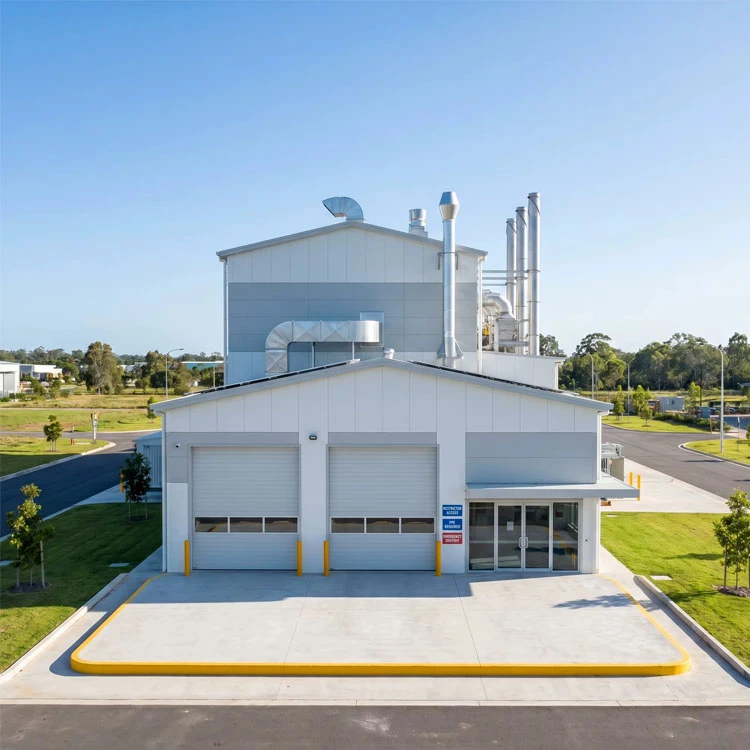
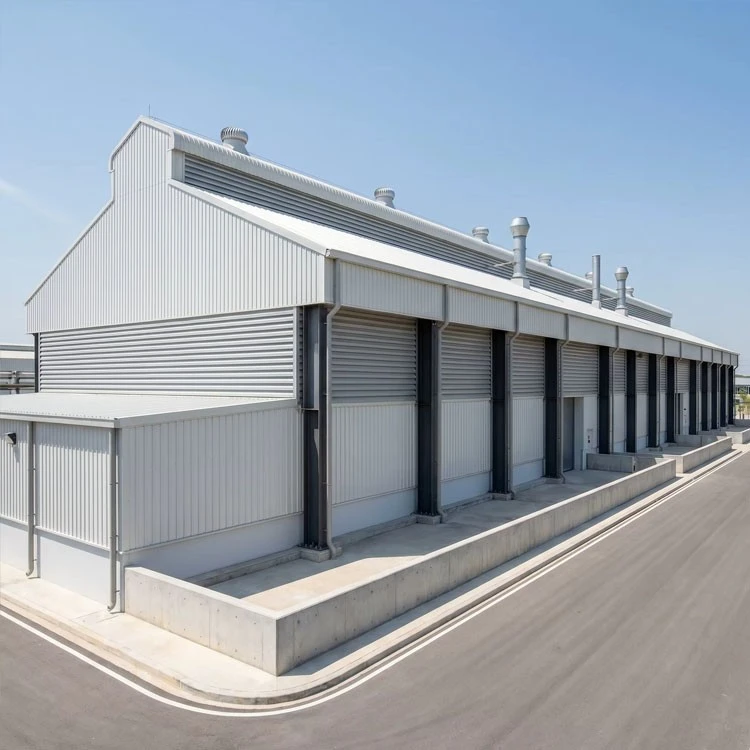


Steel Structure Chemical Plant
Shenyang Zishenlong Light Steel Color Plate Co., Ltd. is one of the most reliable manufacturers and suppliers of steel structure chemical plant in China, also supports customized service. Welcome to buy CE and ISO approved steel structure chemical plant at low price from our factory.
Chemical Compatibility Before Steel Selection
We don't start with a frame design. We start with a chemical inventory: what acids, what solvents, what concentrations, what temperatures. The answers determine the coating system, the ventilation architecture, and whether secondary containment is structural or separate.
- Resolved at engineering stage:
- Coating specification mapped to your chemical exposure: ISO 12944 C5-I (industrial chemical atmosphere) or C5-M (marine-chemical), with DFT ≥ 280μm on primary steel
- Base connection detail: chemical-resistant grout under every column base plate, epoxy cove seal where steel meets floor - no exposed steel within 150mm of finished floor level
- Roof structure design load includes scrubber units, exhaust fans, and ductwork supports - these are point loads, not uniform loads, so we place them on the structural model at the actual mounting positions
- Ridge ventilation and wall louvers sized for the air change rate your process engineer specifies
- Pipe rack and cable tray support steel integrated into the secondary frame - no post-installation drilling through coated members

6 Checkpoints, Chemical Grade
| Checkpoint | What We Verify | Why It Matters |
|---|---|---|
| Raw Material | Mill certificate per heat number; yield strength ≥ 355 MPa; chemical composition verified - no free-cutting steel substitutions | Free-cutting steel has higher sulfur content. In a chemical atmosphere, sulfur-rich steel corrodes faster at the grain boundary |
| Weld Integrity | Ultrasonic on all full-penetration welds; visual on fillets; surface profile checked before coating | Surface profile below 40μm - coating adhesion fails. Profile above 70μm - coating bridges over peaks and leaves pinholes |
| Dimensional | Column straightness ≤ L/1000; beam camber ±3mm; bolt group alignment verified on template | In a chemical plant, misaligned bolt holes mean field modification. Field modification means cutting through factory coating - exactly where you don't want bare steel |
| Surface Prep | SA 2.5 blast to 40–70μm profile; chloride contamination test on blast media before use | Chloride residue on blasted steel starts under-film corrosion before the coating even cures. You won't see it for two years |
| Coating Application | Zinc-rich epoxy primer → high-build epoxy intermediate → chemical-resistant polyurethane topcoat; each layer DFT verified; cross-hatch adhesion tested | Three-coat C5 system applied in controlled factory conditions, not in a tent on your site where humidity and dust are uncontrolled variables |
| Trial Assembly | One transverse frame assembled and measured; all connections verified; coating inspected for transit damage after disassembly | Touch-up on site is never as good as the original factory coat. The less you need to touch up, the longer the frame lasts |

Built for What It Contains
- Structural - standard chemical plant parameters:
- Clear span: 18m to 28m per bay, no internal columns interrupting process layout
- Eave height: 8m to 14m, driven by vessel height plus overhead clearance for maintenance lifts
- Crane capacity: up to 15T for reactor and vessel handling during installation and turnaround
- Mezzanine levels: integrated into the primary frame for operator access platforms, control rooms, and sample stations
- Corrosion protection - ISO 12944 C5 as baseline:
| Exposure | Coating System | DFT | Expected Life to First Maintenance |
|---|---|---|---|
| C3 (urban/light industrial) | 2-coat epoxy-polyurethane | ≥ 200μm | 5–7 years |
| C4 (heavy industrial) | 2-coat epoxy-polyurethane, high-build | ≥ 250μm | 7–10 years |
| C5-I (chemical atmosphere) | 3-coat: zinc epoxy + high-build epoxy + chemical-resistant PU | ≥ 280μm | 10–15 years |
| C5-M (marine-chemical) | 3-coat with enhanced zinc primer | ≥ 320μm | 10–15 years |
We spec C5-I as the default for any building handling acids, solvents, or corrosive intermediates. C3 is only offered for non-process buildings like warehouses on the same site.
- Ventilation and containment:
- Ridge ventilation area calculated from the process ventilation rate - we don't guess
- Roof structure pre-engineered to carry scrubber and exhaust fan dynamic loads
- Floor-to-column cove seal on all primary columns within process bays
- External bunding tie-in points pre-set at column lines for tank farm secondary containment
Chemical Plants, Three Sites
- Water Treatment Chemical Plant - Abu Dhabi, UAE
- 4,500 m², single bay at 26m span, 12T crane
- C5-M coating: coastal humidity plus chlorine-based product exposure
- Ambient design temperature 48°C; thermal expansion joints integrated into roof and wall purlin layout
- External bund wall tie-in at 14 column positions for the tank farm
- 50-day erection in summer conditions
- Why it mattered: the site is 3 km from the Gulf. The combination of salt spray and chlorine atmosphere meant standard C4 coating would have required maintenance within three years.
- Agrochemical Formulation Plant - Binh Duong, Vietnam
- 3,200 m², two bays at 22m span, 8T crane
- C5-I coating in formulation bays; C4 in raw material storage
- Roof designed for monsoon rainfall: 150mm/hour drainage capacity, gutter system oversized by 30% above code minimum
- Mezzanine control room integrated into the frame at eave level
- 47-day erection
- Why it mattered: the client's previous building had roof leaks during the monsoon that contaminated product batches. The oversize gutter system and continuous ridge cap with no lap joints eliminated that failure mode.
What You Get at Handover
- As-built structural and architectural drawings with coating system callouts
- Full material certificate package - one per heat number, including chemical composition
- Coating application log: date, ambient conditions, wet film thickness, dry film thickness per coat, adhesion test results - per structural zone
- WPS and PQR for all weld procedures
- Bolt schedule by zone with torque values
- ISO 9001 + CE Declaration of Performance
- Optional: coating dry film thickness survey report by independent third-party inspector
The coating log is the document your insurer and your environmental auditor will ask for. We don't treat it as optional paperwork.

FAQ
- Q: What chemicals can your coating handle?
The C5-I three-coat system handles most industrial chemical atmospheres: organic acids (acetic, formic), mineral acids at low concentration (sulfuric, hydrochloric vapor), solvents (toluene, xylene, MEK), and alkaline solutions. If you're handling concentrated oxidizing acids (nitric, chromic) or hydrofluoric acid, we need to discuss specialty coating systems - and honestly, those applications may require stainless steel secondary members. Send us your chemical inventory and we'll tell you straight what works and what doesn't.
- Q: How do you prevent corrosion at bolt holes and connections?
Bolt holes are drilled before coating, so the hole interior gets coated. Bolted connections get a wet-assembly coating: the faying surfaces are coated, the bolts are torqued, and a stripe coat is applied over the bolt heads and nut faces after assembly. It's not as perfect as an unbroken factory coat, but it's the best practice per ISO 12944-5 for C5 environments.
- Q: Can you integrate our process equipment supports into the building frame?
Yes - we need your equipment layout and load data at the engineering stage. Vessel support beams, agitator platforms, and pipe rack brackets are designed as part of the secondary frame and fabricated in the same batch. This avoids the common problem of a process contractor welding supports onto your coated building steel and destroying the corrosion protection.
- Q: What's the lead time for a chemical plant building?
50–65 days from deposit to shipment. The coating process adds about a week compared to a standard industrial building - each of the three coats needs cure time at controlled temperature and humidity. You can't rush this. A coating that's force-cured too fast will micro-crack and fail early.
- Q: How does your building help with environmental permitting?
The structural documentation package supports your permit application in three ways: (1) the coating specification proves the building itself is compatible with the chemicals you're handling; (2) the secondary containment tie-in drawings show how the building integrates with your spill control system; (3) the ventilation architecture documentation demonstrates that the building accommodates the required air change rate. We're not your environmental consultant, but we give them what they need to sign off.
Hot Tags: steel structure chemical plant, China steel structure chemical plant manufacturers, suppliers, industrial unit construction, metal house buildings, modular distribution center steel frame, steel industrial shed, Steel Structure Logistics Depot, structural steel framework
You Might Also Like


Send Inquiry